Master of Science in Entomology: Vector-Borne Disease Biology Curriculum

The MS Entomology: Vector-Borne Disease Biology program will not be accepting future students to this program.

We partnered with the Department of Entomology at Cornell University between 2020 and 2026 to offer an interdisciplinary Master of Science program in vector-borne disease biology. This program fell within the Medical and Veterinary Entomology Concentration, and combined entomology and public health course work from the College of Agriculture and Life Sciences and College of Veterinary Medicine.

Program Highlights

Our goal for the MS in Entomology program in vector-borne disease biology was to provide a foundation from which graduates can immediately enter the workforce in vector surveillance, control, and related fields. Students experienced an innovative curriculum covering vector biology and ecology, public health competencies, and the most recent advances in vector control and vector-borne disease prevention.

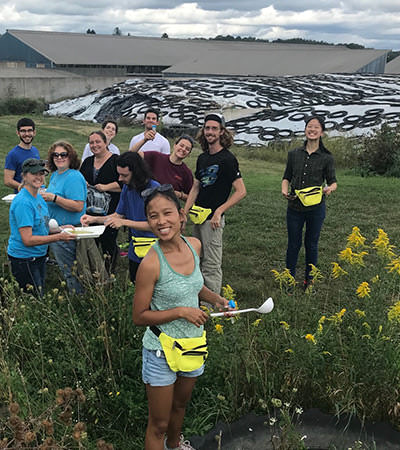
During this two-year program, students interacted with leading medical entomologists, virologists, epidemiologists, field ecologists, and statistical modelers across multiple academic, state, and federal government and public health institutions in the Northeast. Students also gained hands-on experience in the field through coursework and a required 10-week summer internship with a regional partner

Graduates of this program were able to immediately enter the workforce in a wide range of roles, including biologists and control specialists for vector control districts and agencies; program coordinators and managers for public health agencies and programs; scientists working with agricultural and cooperative extension programs; and more.

Core Competencies

Graduates of the program will demonstrate a high level of competency in the following skills and knowledge areas:

  1. Arthropod biology, behavior, and taxonomy
  2. Vector-borne pathogens of global and regional importance
  3. Vector-borne disease prevention and control strategies and systems
  4. Impact of public health systems on vector-borne disease transmission
  5. Professionalism in the public health and vector biology workforce
  6. Core competencies of public health professionals and vector biologists

Program Requirements

Graduates of the MS in Entomology Vector-Borne Disease Biology program are required to complete a mixture of instructional credits and master-level thesis research credits. Students are required to establish a committee, including Dr. Laura Harrington and one other faculty member.

Summer Internship:

A mandatory 10-week summer internship at a federal, state, or local health department or vector control agency is required. NEVBD will provide salary and housing support for summer internship students. Students can select from the following topical areas for their internship project:

  • Vector biology
  • Vector surveillance
  • Vector control
  • Insecticide resistance
  • Repellents
  • Big data management
  • Statistical modeling
  • Public health messaging
  • Public perceptions of vector-borne disease

Thesis Research:

Students will be expected to complete a written, publication-quality thesis based in part on their summer internship programs.

Final Practical and Written Exam:

Students will take a final oral practical exam and a written exam. A passing grade of 75 is required to complete the MS in Entomology program.

Required Courses

This program includes 8 required core courses covering topics of entomology and vector biology (20 credit hours), and 5 required core courses covering public health topics and competencies (14 credit hours). Students must also dedicate at least 2 credit hours each semester to master-level thesis research.

This program is designed to be completed in two years. Please visit the Cornell Class Roster to learn more about the courses listed below.


Core Entomology and Vector Biology Courses
Total credits: 20

Course Semester Credits
ENTOM 2120 + LAB Insect Biology Fall 4
ENTOM 3030 Applied Statistics: Biological Experiments in Practice Spring 4
ENTOM 4520 Introduction to Disease Vectors​ Fall 3
ENTOM 4521 Introduction to Disease Vectors​ Lab Fall 1
ENTOM 6520 Malaria Biology and Control Spring - Odd Years 2
ENTOM 6530 Control of Disease Vectors Spring - Even Years 2
ENTOM 6540 Vector Biology in Practice Spring 2
ENTOM 7670 Professional Development in Entomology Fall 2

Core Public Health Courses
Total credits: 13

Course Semester Credits
VTPEH 6101 Public Health Foundations I Fall 2
VTPEH 6102 Social Epidemiology Principles and Multilevel Influences on Health Spring 3
VTPEH 6104 Epidemiology in Practice Fall 3
VTPEH 6175 Introduction to GIS for Public Health Fall 3
VTPEH 6184 Public Health Practice: Communication Fall 2

Research/Thesis Courses

Course Semester Credits
ENTOM 8900 Master-level Thesis Research Fall; Spring; Summer Varies
IRB and IACUC training certification (online) Fall; Spring None

Elective Courses

ENTOM 6900 Seminar in Ecology & Evolution of Infectious Diseases Fall; Spring 1
ENTOM/BIOEE 4940 Ecology & Evolution of Infectious Diseases Spring 4
BIOMI 2500 Public Health Microbiology Fall 3
BIOMI 4090 Principles of Virology Fall 3
BIOMI 4310 Medical Parasitology Fall 2
NTRES 6600 Research Data Management Seminar in the Environmental Sciences Spring 1
NTRES 6700 Spatial Statistics Spring 3
NTRES 4601/6601 Decision Making in Natural Resource Management Spring 3
VTPEH 6103 Public Health Policy Spring 3

Students may choose additional electives if approved by their advisor and committee.

Program Costs and Funding

This program offered full support to admitted students, including a Graduate Research Assistant (GRA) stipend for the academic and summer calendar, tuition, and health insurance coverage.